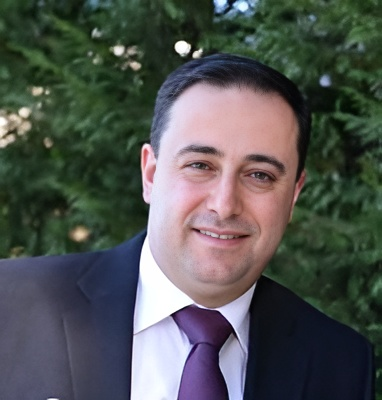
Bacel Maddah
American University of Beirut, Lebanon
Dynamic Games and Applications Seminar
Store-Wide Space Planning with Multiple Objectives – Retailing Meets Health and Queueing Theory
Feb 20, 2026 11:00 AM — 12:00 PM (Montreal time)
Hybrid seminar at HEC Montréal, room EY (1st floor, blue section) or Zoom
A growing research stream concerns space planning that takes a “store-wide” view by considering the problem of allocating all product categories to store shelves, a problem also referred to “macro space planning.” This talk presents recent work on store-wide space planning emphasizing different objective functions, e.g., impulse profit, shopping convenience, and health. The methodology of the research emphasizes spatial demand models, which are embedded in nonlinear integer programs that are then linearized to provide good solutions with popular solvers. We describe the key building blocks of these recent models, and discuss managerial insights and computational challenges, within the context of two supermarkets in different continents.
Viewing the shopping area as a self-service system with infinite capacity, classical queueing theory, mainly Little’s law and the standard M/G/∞ system, provides useful insights and allows expanding the scope of the model. We explicitly capture aspects such as social distancing constraints, shopping visit duration, and the effect of traffic variability.